• recipes of HOPE
  • home
  • news & reflections
  • manifesto
Menu

humanKINDER

7 Stoney Street
Nottingham, England, NG1 1LG
+33 (0)769859902
redefining the lines drawn to hold us down, keep us silent

humanKINDER

humanKINDER

  • recipes of HOPE
  • home
  • news & reflections
  • manifesto

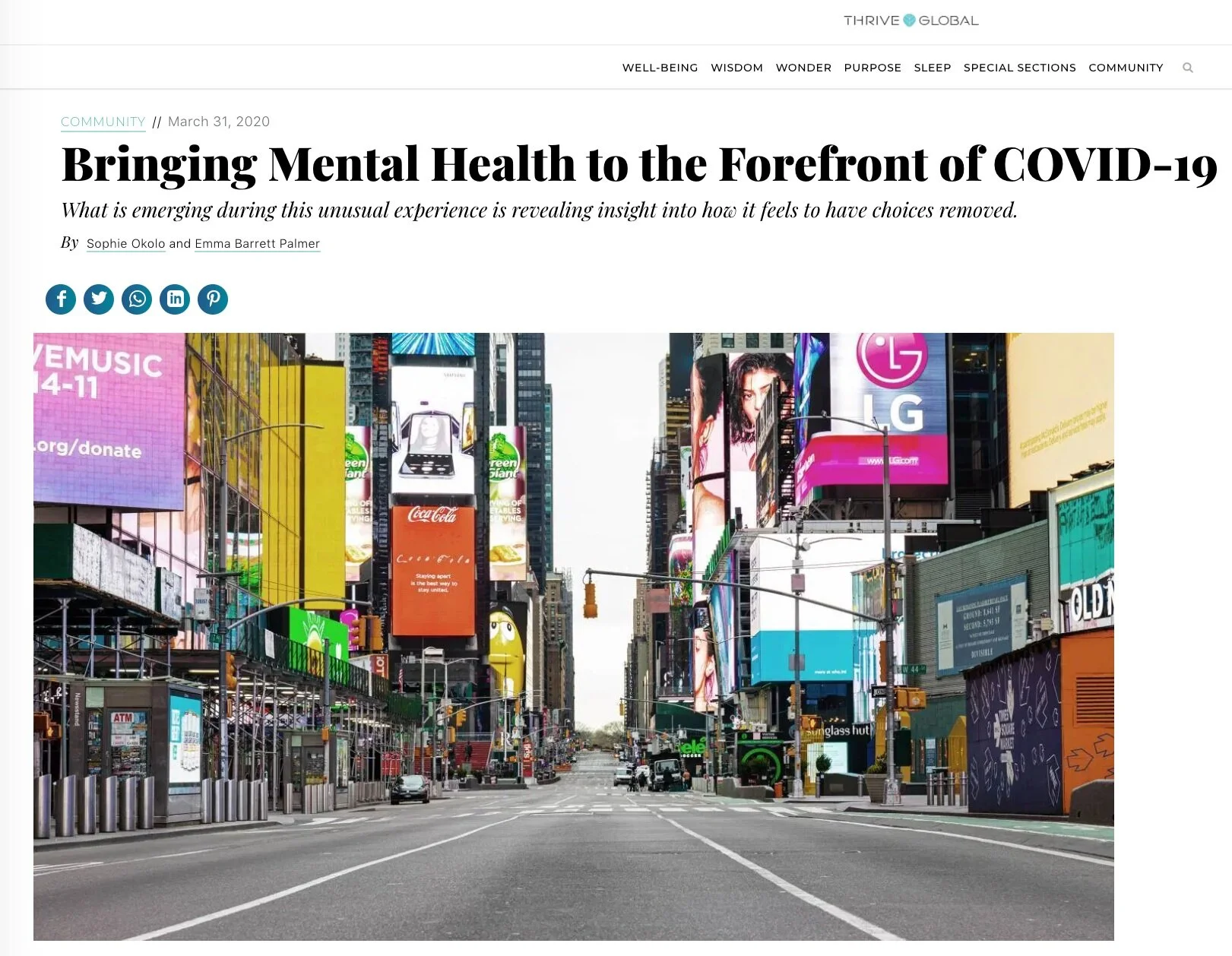
Bringing Mental Health to the Forefront of COVID-19, first published in THRIVE GLOBAL 31st March 2020

May 14, 2020 Emma Barrett Palmer
thrive_global_article_okolo_barrett_310320.jpg

The COVID-19 pandemic has resulted in travel restrictions, border shutdowns, and widespread stay-at-home orders around the world. While most governments are advising self-isolation and social distancing to prevent the spread of the virus, we must be mindful of what this regulation means in practice and its impact on daily living. As cities continue to propose new rules, mental health and well-being must play a major part in the conversation – especially in this time of our “new normal”.

Concerns About Increasing Loneliness

Even before the virus, loneliness was considered an epidemic. As the situation with COVID-19 persists, isolation during extended periods could potentially increase feelings of loneliness and the health issues associated with it. Even now, studies suggest loneliness can increase the risk of premature death by 26 percent — making it as dangerous as smoking 15 cigarettes a day. While older adults and those with underlying conditions are especially vulnerable to the pandemic, people who live alone, people who already feel lonely, or those who are facing mental health issues may also experience a decline in their mental health. This can result in increased stress levels throughout forced isolation.

Rising Inequalities and Stigma

In already vulnerable communities, the virus can significantly increase existing issues. For example, the following groups may be particularly at risk: people living with chronic illness, those in fear of domestic violence, individuals relying on zero-hour working conditions or unstable accommodations, and people forced to flee from conflict or environmental and climate change.

Stigma around mental health is also common, even if some societies have made great progress. As British author C.S. Lewis states in his book The Problem of Pain: it is easier to say, “My tooth is aching” than to say, “My heart is broken.” Creating more supportive environments and empowering people to share their experiences can help reduce mental health stigma.

Communities overall are experiencing the impact of COVID-19 at various levels. Even where mental health issues are absent, a pandemic can cause health effects due to the stress and uncertainty of the situation.

Our New Normal in A Time of Great Risk

As we face the underlying trauma of these uncertain times and various levels of change, we must do so with our eyes open. We must be mindful of the extended periods spent in isolation, and how this may affect our mental well-being. And we must talk about it. Fear of the unknown plays a significant role and is likely to affect people each day in several ways. Watching or listening to negative information about the pandemic in large amounts, however important that information may be, is not particularly healthy. Finding the balance between being informed versus being overwhelmed, listening to our bodies, and allowing time for mental rest is essential during times of chaos. 

What is emerging during this unusual experience is revealing insight into how it feels to have choices removed. But we must strive for purpose and meaning to manage our new daily reality. This also involves connecting with others and learning from those with lived experiences of isolation – indeed, these times call for togetherness. As Dr. Tedros Adhanom Ghebreyesus, WHO Director-General, said: “This is the defining global health crisis of our time . . . We are all in this together, and we can only succeed together. So, the rule of the game is TOGETHER.”

With full honor and respect for those who have and continue to lose their lives in these tragic circumstances, including medical staff in the line of duty, we can find a new shared global strength in this incredibly intense period of the COVID-19 pandemic. An excerpt from Lockdown, a poem by Irish Priest, Father Richard Hendrick O.F.M. states, “… And though you may not be able to touch across the empty square, Sing.”

Together

There are many examples of communities coming together to help in response to these uncertain times, and there are emerging signs of nature recovering, unthinkable merely a month ago.

How societies respond to this major crisis of our time is an opportunity to bridge the divide between physical and mental health realms. There is also a possibility of developing new behaviors during forced isolation that could determine how easy or difficult it is to reintegrate back into the community.

We now need government, infrastructure, and media agencies to take a holistic and balanced approach to act on and report about the virus, which prioritizes mental health and well-being in national agendas and gives us all the strength to ride the storm. We need more focus on reporting the kind and selfless community acts and natural phenomena that are flourishing across the globe. An emphasis on the holistic health of mind, body, and spirit is essential to enable us to work together towards our new normal.

— Published on March 31, 2020, THRIVE GLOBAL Link to original article here.
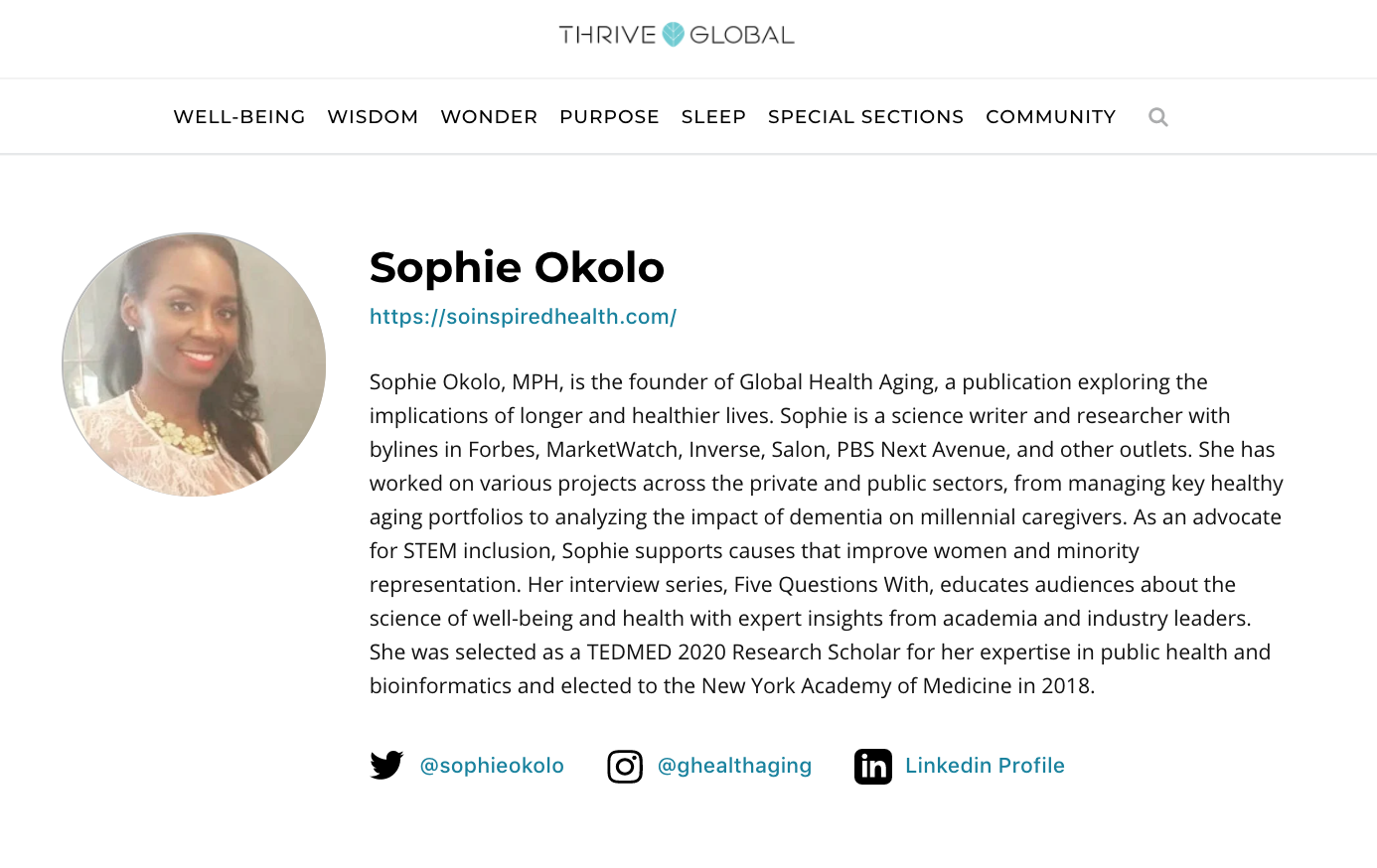
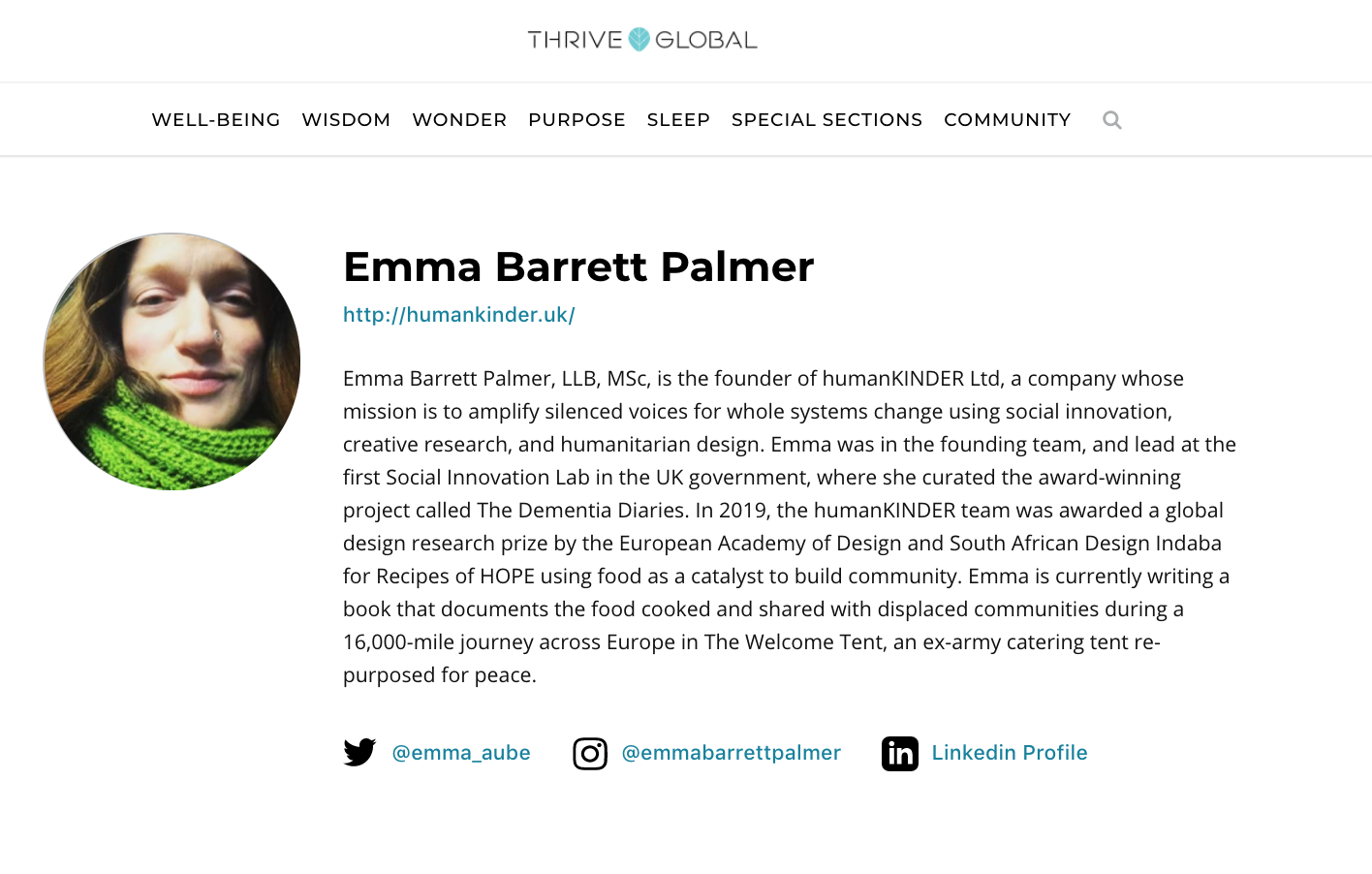
thrive_global_sophie_bio_20.png
Thrive_global_emma_bio_20.png
Source: www.humankinder.uk
Comment

New world resilience.

March 17, 2020 Emma Barrett Palmer
Lockdown Mood. 31st March 2020. Emma Barrett Palmer. Chamonix-Mont-Blanc, France

Lockdown Mood. 31st March 2020. Emma Barrett Palmer. Chamonix-Mont-Blanc, France

It is Day 17 - I think - of lockdown in an eerily quiet Chamonix-Mont-Blanc. While my husband caters for the medical teams at the local hospital with Osmose Cuisine, I am using every spare minute of my time and energies to write the Recipes of HOPE Manuscript in between home-schooling. With editorial support from Sophie Okolo, humanKINDER Board Member and Founder of Global Health Aging, this labour of love tells the stories of resilient communities across Europe using the universal language of food. It documents the dishes we shared in The Welcome Tent, a repurposed army catering tent, during my family’s 16,000 mile journey between 2017-18. The book will share recipes which represent over a hundred cultures from around the world and was inspired by the courage of the friends we first met in Calais in 2015.

Many of us have been trying to work differently for years, against the grain of a system that was first designed with exploitation in mind. The potential infrastructure collapse as a result of the current pandemic will not come as a surprise. Many of us had already seen through a window into this future - anticipating - during work and interactions with ignored, displaced and uprooted communities from around the world. A pivotal turning point in my understanding was taking part in Layla F Saad’s Me and White Supremacy Challenge - you can purchase the book here.

When working in government for ten years, I realised that some voices - of the strongest and most resilient people - were being silenced by process and procedure. I believe these are the people we must listen to, learn from and work with: people who have experienced the weight of exploitation, generational trauma or challenging life experiences. Creative participation, grounded in justice and education, is already revealing genuine truths.

“If you take on too much of it, it can collapse you into despair … the other temptation is to go back to denial, minimisation, dismissal...neither of those is a resourceful state. what you want to do is claim the centre: deliberate and decide. Think clearly and then act clearly. Separate your emotions from your deliberations and your decisions… breathe… take the right actions early… first get to higher ground. Secure yourself so that you can be part of the solution so you are not another casualty that needs looking after. ”
— Jamie Wheal interview with Rebel Wisdom March 18 2020

As someone who has experience of Post Traumatic Stress Disorder, I know what it is like to live a double life – to be smiling on the outside, but cold with fear on the inside, to start shaking on public transport, to be paralysed with anxiety. As we see events unfold in real life, I predict the whole of society could be traumatised to varying degrees by the current unprecedented challenges we are facing. These turbulent times require us to take ownership of the trauma but focus on the recovery - personally and as a society - consciously training our minds and bodies, nurturing our imagination - escapism to prevent institutionalisation - while holding on dearly to what matters. Living with PTSD made me more vulnerable, but also more receptive. My recovery made me strong: it taught me how to ride the waves.

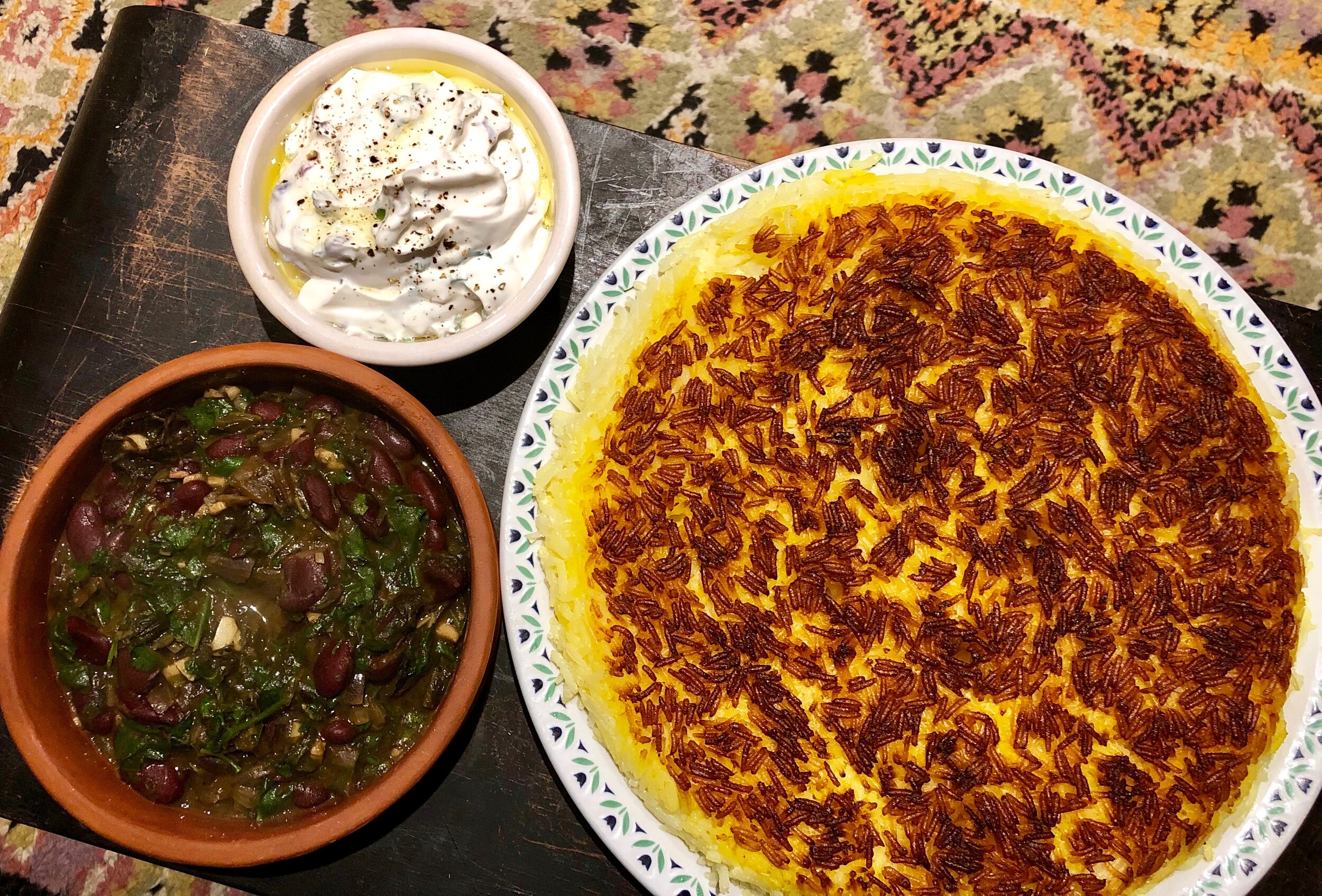
Recipe testing at home during lockdown. Ghormeh Sabzi. Shared by Nahid at The Welcome Tent at The Angel Microbrewery in Nottingham. UK

Recipe testing at home during lockdown. Ghormeh Sabzi. Shared by Nahid at The Welcome Tent at The Angel Microbrewery in Nottingham. UK

I worked for ten years leading the first social innovation lab in UK regional government, coordinating whole system design projects addressing systemic challenges faced by society. To activate a community to solve a problem, a common purpose and language are essential. I found the limiting factors in a government setting were trust and integrity. I have focussed on these two missing ingredients as I have nurtured my own business, humanKINDER Ltd, since 2016. We use food - the language of love, life and survival - as a contextual catalyst for systems innovation, activating community participation in The Welcome Tent. I have found that community recovery needs:

“acknowledgement of systemic pain... equity of representation... needs us to remain hopeful, by sharing what works and being kind to ourselves, each other and nature.”
— humanKINDER Ltd 2020 Strategy

As super market shelves become empty we must ask the who and the how regarding decisions being made about our existing resources. How can this be done in an ethical way? If there are already fights over toilet paper, what happens when the food runs out? How long can the privilege of purchasing for ourselves as individuals continue: or should we use this pandemic as a reason to transition to local producers, bulk-purchasing where possible from ethical suppliers by community, by tower block, by street, by village? I believe a priority for us all must be to keep asking questions about our civil liberties, freedoms and participation in governance structures, so their erosion does not become our new normal forever.

“we’ve been trained for individualism and it is seriously undermining our resilience ”
— Rich Bartlett, Head of www.Enspiral.com, developing protocols for anti-fragile communities

It is no coincidence that the people first off the starters’ blocks to back-up the medical front-line, is the humanitarian army of organisers, volunteers and activists that recognise the ‘rabbit in the headlights’ look in themselves and others, but have made action their priority. Have a look at Compassion London, a project set up this week in London and already feeding hundreds of vulnerable children, communities and NHS health workers.

The Recipes of HOPE that I have documented in the forthcoming book will share a wealth of hope and inspiration to build resilient communities all the more suited to navigate our uncertain future. When the time is right and the book is ready - Mont Blanc the highest mountain in Europe will be a natural stage to share - amplifying silenced voices for systems rebuild.

I can be reached at emma@humanKINDER.UK for all enquiries about humanKINDER consultancy, speaking engagements and The Welcome Tent. To contribute towards the production costs of the Recipes of HOPE Manuscript, we are gratefully receiving donations at paypal.me/humanKINDER. Thank you.

Sources

Quotes above are transcribed from the highly recommended Rebel Wisdom’s - Resilience in Time of Crisis.

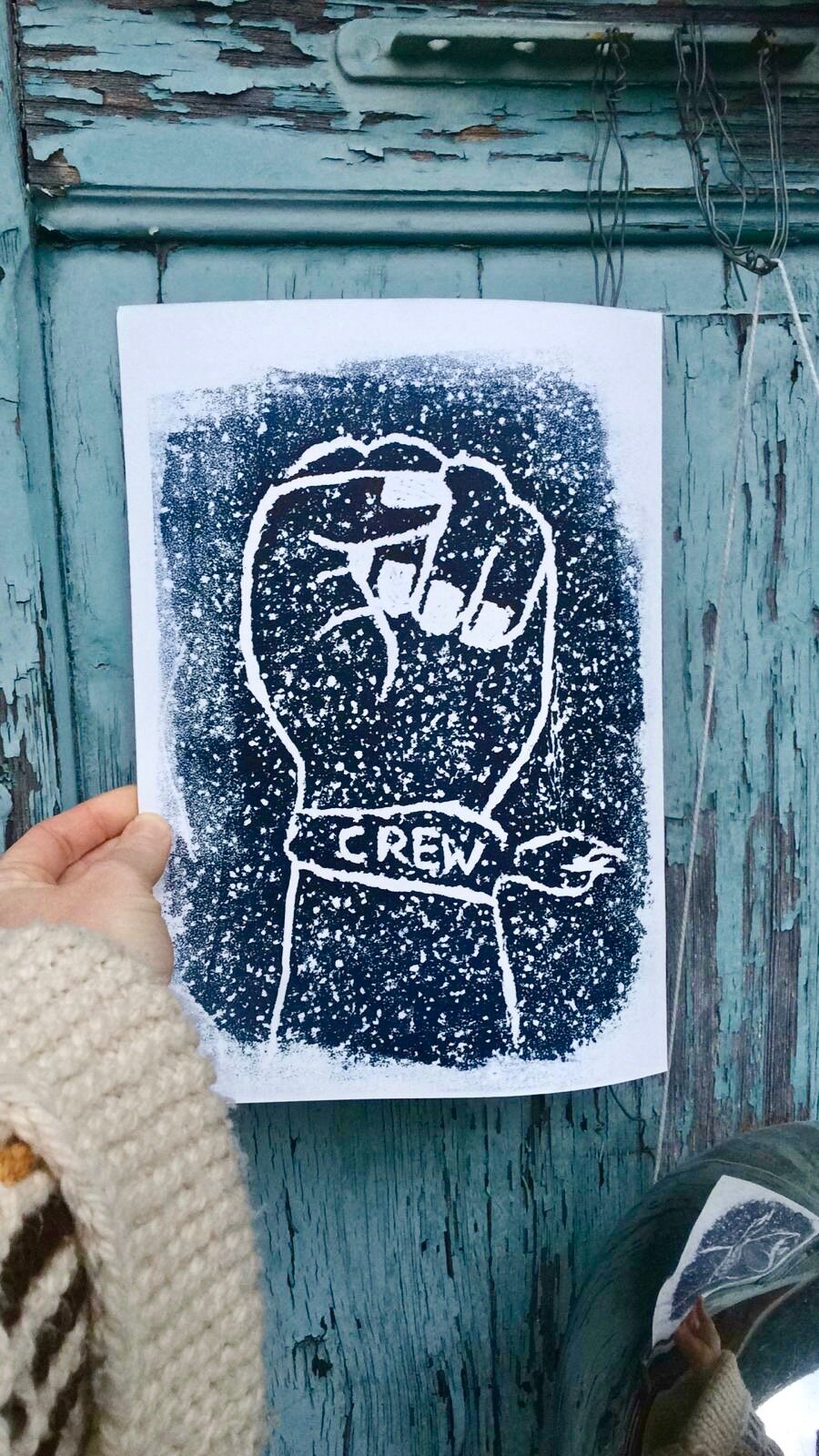
Happiness All Around Crew. 31st March 2020. Emma Barrett Palmer. Chamonix-Mont-Blanc. France.

Happiness All Around Crew. 31st March 2020. Emma Barrett Palmer. Chamonix-Mont-Blanc. France.

Source: www.humanKINDER.UK
Tags socialdesign, socialinnovation, rethinkingactivism, activism, systemic, systemschange, wholesystem, systems, design
Comment

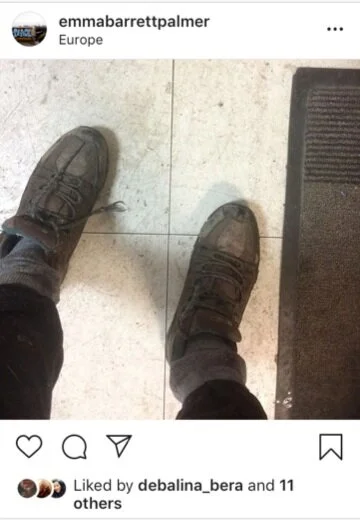
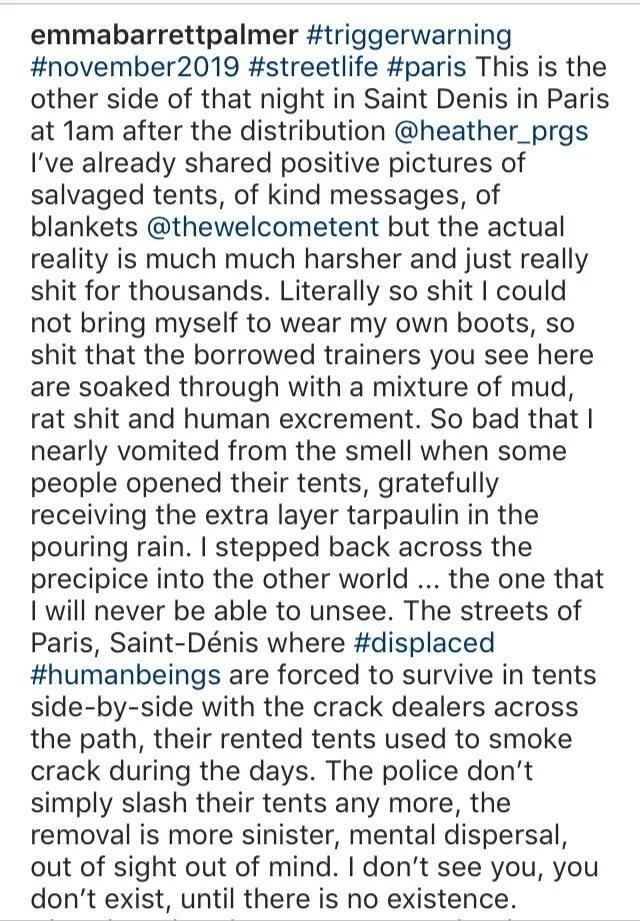
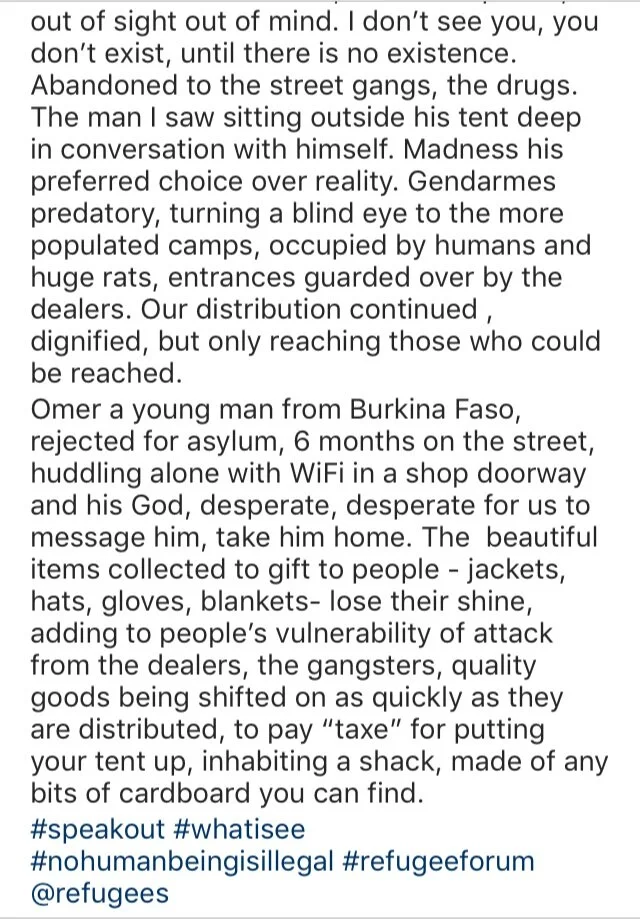
Paris Refugee Ground Support, November 2019

December 27, 2019 Emma Barrett Palmer
image1.jpg
image2.jpg
image3.jpg
Tags truth, paris, whatisee, thewelcometent, shit, tents, streetlife, cardboard, homeless, displaced, refugee, 2019, frontline
Comment
← Newer Posts Older Posts →

#recipesofhope

Summary Block
This block is invalid. Please check the block settings and try again.
Featured
Aenean eu leo Quam
Aenean eu leo Quam

Quisque iaculis facilisis lacinia. Mauris euismod pellentesque tellus sit amet mollis.

Read more →
 
 
Newsletter Block
This newsletter signup form needs a storage option. Edit the block and enter a storage location via the Storage tab.

Would you like to stay in touch?

Sign up with your email address so we can stay in touch.

We respect your privacy and will not share your details.

Thank you!

never forget to dance

humanKINDER — UK Company #10334432 — All Rights Reserved (2016-2026)

7 Stoney Street, Nottingham, United Kingdom, NG1 1LG

brand artwork by ThisLakshmi

website photography by Emma Elizabeth Barrett, unless otherwise stated.

please attribute all works and imagery to humanKINDER.